Navaratri 2026 Dates: Sharad Navratri Calendar, Ghatasthapana Muhurat, 9 Days and Dussehra
 By Digital Karmakanda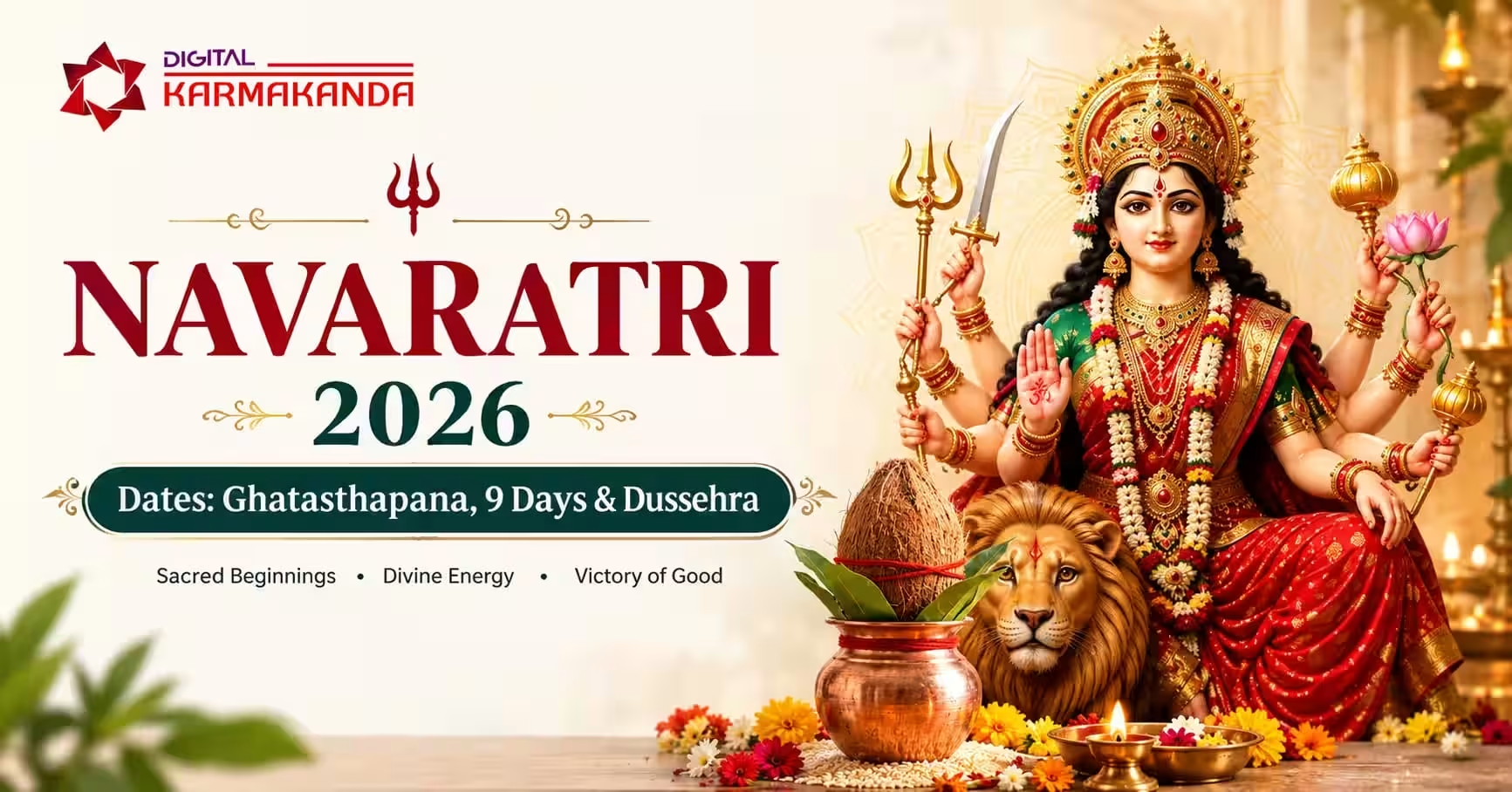
Sharad Navaratri 2026 begins on Sunday, October 11, 2026 with Ghatasthapana and runs through the nine nights to Maha Navami on Monday, October 19. Vijayadashami (Dussehra) is on Tuesday, October 20, 2026.
Sharad Navaratri (also spelled Navratri, Shardiya or Shardiya Navratri) is the autumn festival of nine nights devoted to Goddess Durga. It falls in the bright fortnight (Shukla Paksha) of the Hindu month of Ashwin. This guide gives the 2026 dates, the Ghatasthapana muhurat, the goddess worshipped on each day, fasting rules and regional customs across India.
Navaratri 2026 Dates at a Glance
Event | Day and date |
Navaratri begins (Pratipada) and Ghatasthapana | Sunday, October 11, 2026 |
Saptami (Kalaratri) | Saturday, October 17, 2026 |
Durga Ashtami and Maha Navami (most panchangs) | Monday, October 19, 2026 |
Vijayadashami / Dussehra | Tuesday, October 20, 2026 |
Why Ashtami and Navami share a dateIn 2026, the Ashtami tithi ends early on October 19 and Navami runs through the rest of that day into October 20. Because of this overlap, most North Indian and pan-India panchangs observe Durga Ashtami, Sandhi Puja and Maha Navami on October 19. Some Bengal and regional Durga Puja calendars mark Maha Ashtami on October 18 and Maha Navami on October 20. Always follow your local panchang, family priest or temple, but note that Dussehra on October 20 is consistent across traditions.
Navaratri 2026 Day-Wise Calendar
Day | Date | Tithi | Form of Durga |
1 | Sun, Oct 11 | Pratipada | Shailaputri (Ghatasthapana) |
2 | Mon, Oct 12 | Dwitiya | Brahmacharini |
3 | Tue, Oct 13 | Tritiya | Chandraghanta |
4 | Wed, Oct 14 | Chaturthi | Kushmanda |
5 | Thu, Oct 15 | Panchami | Skandamata |
6 | Fri, Oct 16 | Shashthi | Katyayani |
7 | Sat, Oct 17 | Saptami | Kalaratri |
8 | Sun, Oct 18 | Ashtami begins / preparation | Mahagauri |
9 | Mon, Oct 19 | Ashtami ends, Navami | Siddhidatri (Durga Ashtami and Maha Navami) |
10 | Tue, Oct 20 | Dashami | Vijayadashami (Dussehra) |
Tithi timings vary by city, so a few panchangs shift a day. Use your local panchang for the exact tithi times.
What Is Sharad Navaratri?
Navaratri means "nine nights". India observes it twice a year in its most widely followed form: Chaitra Navratri in spring and Sharad Navratri in autumn. Sharad Navratri is the larger and more widely celebrated of the two. It leads directly into Vijayadashami, which marks the victory of good over evil.
Two stories are linked to the festival:
- Goddess Durga defeating the buffalo demon Mahishasura, celebrated especially in eastern India as Durga Puja.
- Lord Rama's victory over Ravana, celebrated through Ramlila plays and Ravana effigy burning on Dussehra, especially in northern and central India.
The nine forms of the Goddess, collectively called Navadurga, are worshipped one by one over the nine nights.
Ghatasthapana 2026: Date and Muhurat
Date: Sunday, October 11, 2026.
Ghatasthapana (also called Kalash Sthapana) is the ritual installation of a sacred pot that represents the Goddess. It is done on the morning of Pratipada.
Muhurat: One widely used panchang lists the primary window as 6:19 AM to 10:12 AM for the Delhi region, with the Abhijit muhurat around 11:44 AM to 12:31 PM as an alternative. Timings shift by a few minutes to over half an hour across Indian cities, so check the muhurat for your own city.
What you need:
- A clean earthen or copper kalash filled with water (Ganga jal if available)
- Soil in a shallow tray with barley (jau) seeds
- Coconut with the husk, mango leaves, red cloth or chunri
- Akshata (unbroken rice), roli, flowers, incense and a ghee or oil lamp
- A picture or idol of Goddess Durga
Basic steps:
- Bathe, clean the puja space and set up a raised platform.
- Spread the soil, sow the barley and lightly sprinkle water.
- Place the kalash on or beside the soil bed, with mango leaves and the coconut on top.
- Light the lamp, offer flowers and rice, and invoke the Goddess with mantras or the Durga Saptashati according to your practice.
- Keep an akhand jyot (continuous lamp) if your tradition follows it, and water the barley daily.
Customs differ among families and regions. Follow your priest or family tradition where it varies from the outline above.
The Nine Forms of Durga: What Each Day Means
- Day 1, Shailaputri (Oct 11): The "daughter of the mountain", a form of Parvati. She is associated with strength and the root of spiritual practice.
- Day 2, Brahmacharini (Oct 12): The form that performs penance. She symbolises discipline, focus and devotion.
- Day 3, Chandraghanta (Oct 13): Shown with a crescent moon shaped like a bell on her forehead, she represents courage and protection.
- Day 4, Kushmanda (Oct 14): Believed in tradition to be the creator of the universe with her gentle smile. She is linked to health and energy.
- Day 5, Skandamata (Oct 15): The mother of Skanda (Kartikeya). She represents motherly love and grace.
- Day 6, Katyayani (Oct 16): A warrior form of the Goddess, associated with the slaying of Mahishasura. Devotees also pray to her for marriage and family harmony.
- Day 7, Kalaratri (Oct 17): The fierce, dark form that removes fear and ignorance. Many communities perform special night worship.
- Day 8, Mahagauri (Oct 18/19): The fair, serene form associated with purity and forgiveness. Durga Ashtami is the most important fasting and puja day for many families.
- Day 9, Siddhidatri (Oct 19): The giver of siddhis (spiritual accomplishments). Maha Navami is often marked with Navami Homa and Kanya Pujan.
Colours for each day (orange, white, red and so on) are a popular modern custom, especially in western and southern India. They are not required by the scriptures, and different publications list different colours.
Durga Ashtami, Maha Navami and Kanya Pujan
Ashtami and Navami are the peak days of Navaratri. In 2026, most panchangs place both on Monday, October 19.
- Sandhi Puja: Performed at the junction of Ashtami and Navami, mainly in Bengal, Odisha, Assam and other Durga Puja regions.
- Kanya Pujan (Kanjak): Nine young girls, symbolising the nine forms of the Goddess, are invited, their feet are washed and they are offered food such as puri, halwa and black chana. This is widely done in North India.
- Navami Homa: A fire ritual is performed in many temples and homes on the ninth day.
- Ayudha Puja: In South India, tools, books and instruments are worshipped on Navami.
If you are unsure which day to perform Kanya Pujan, your family priest can decide based on the tithi in your city.
Vijayadashami (Dussehra) 2026
Date: Tuesday, October 20, 2026.
Vijayadashami is observed when Dashami tithi is present during the afternoon. In 2026, this falls on October 20 in all major traditions.
Common observances:
- North India: Ramlila performances end and giant effigies of Ravana, Meghnad and Kumbhkaran are burned at sunset.
- Bengal and eastern India: Idols of Durga are immersed in rivers or ponds (Visarjan), and people exchange greetings and sweets.
- Karnataka: Mysuru Dasara concludes with a grand procession.
- Himachal Pradesh: Kullu Dussehra, the famous week-long temple festival, begins on this day.
- South India: Vidyarambham, the start of learning for children, is performed in some regions.
Navaratri Fasting Rules and Foods
Many devotees fast for all nine days, others only on the first and last days or on Ashtami. Practices vary by family and health.
Commonly eaten during Navaratri fasts:
- Fruits, milk, curd, paneer and nuts
- Potatoes, sweet potatoes and pumpkin
- Kuttu (buckwheat) flour, singhare ka atta (water chestnut flour), rajgira (amaranth) and sabudana (sago)
- Sendha namak (rock salt) instead of regular salt
- Sama ke chawal (barnyard millet)
Commonly avoided:
- Onion, garlic, meat, eggs and alcohol
- Regular table salt, wheat, rice and most pulses (according to many traditions)
Health note: People with diabetes, pregnancy, chronic illness or those on regular medication should consult a doctor before fasting. Stay hydrated and avoid long gaps without food. You can observe the festival through prayer and charity if a strict fast is not suitable for you.
How Navaratri Is Celebrated Across India
- Gujarat and Rajasthan: Garba and Dandiya Raas are performed in the evenings for all nine nights.
- West Bengal, Assam, Odisha, Tripura and Bihar: Durga Puja pandals, idol worship and cultural programmes, with the main days from Saptami to Dashami.
- North India: Ramlila, Kanya Pujan, Durga Saptashati recital and temple visits, including Vaishno Devi.
- Tamil Nadu, Karnataka, Andhra Pradesh and Telangana: Golu (Bommai Kolu) doll displays, Bathukamma in Telangana and Mysuru Dasara in Karnataka.
- Maharashtra: Ghatasthapana at home and Sonpari Dussehra tradition of exchanging apta leaves.
Is Navaratri Different in Nepal?
The start date is the same: October 11, 2026. Nepal calls the festival Dashain, and its main day (Vijaya Dashami and Tika) falls on October 21, 2026, one day after India's Dussehra. Nepal also has distinct customs such as Jamara, Phulpati and receiving Tika from elders.
Frequently Asked Questions
Sharad Navaratri 2026 starts on Sunday, October 11, 2026, with Ghatasthapana.
Categories:
Book a Puja Service
Get expert guidance for your spiritual needs